Auto Approve
INDUSTRY
Automotive
ROLE
UX/UI Design
team
5 Designers
PRODUCT
SaaS Web App
Year
2022
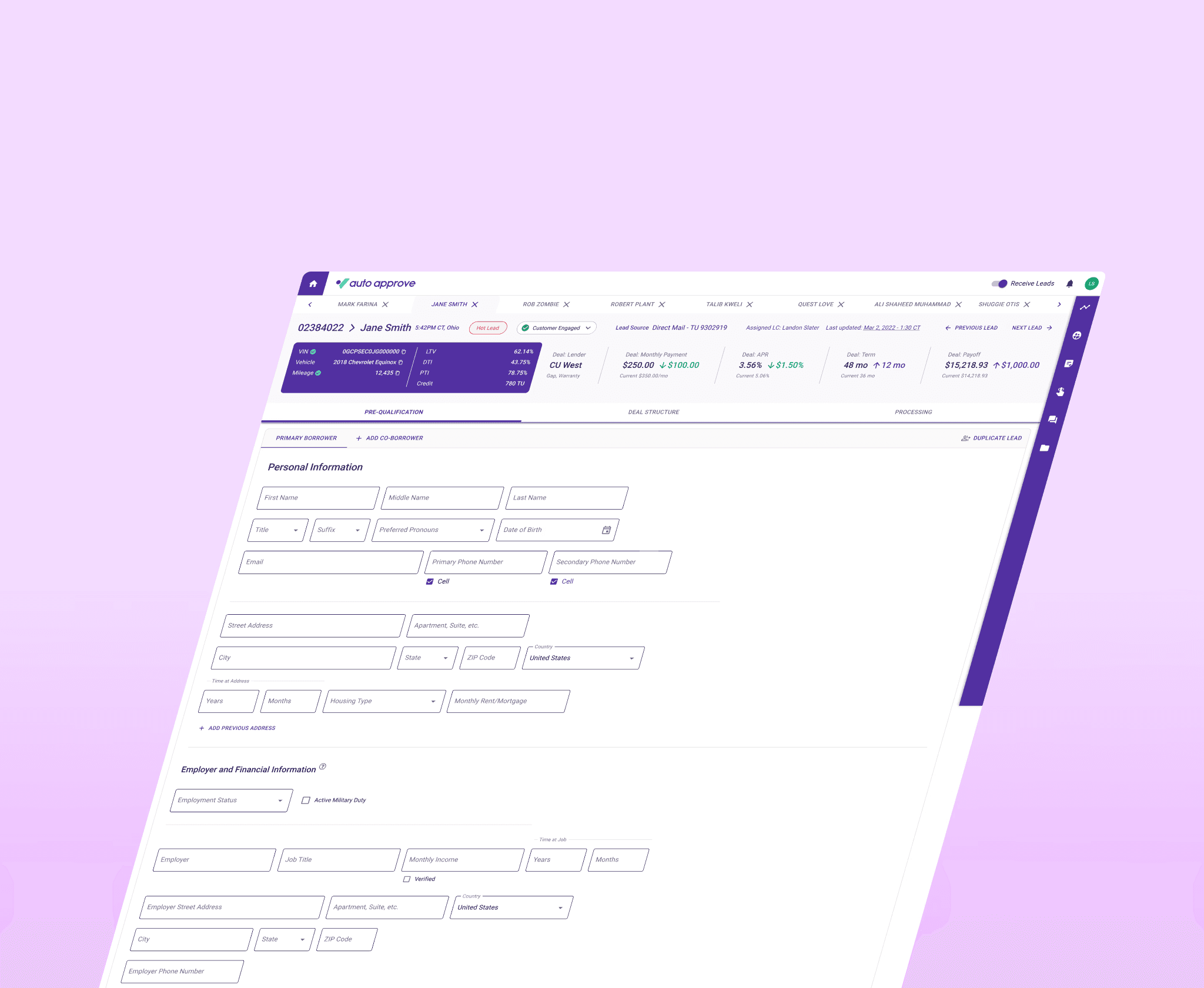
Auto Approve is a vehicle loan refinancing marketplace connecting customers with lenders. This project focused on redesigning the internal platform used by Loan Consultants (LCs) to manage and close deals.
The existing tool was visually outdated, fragmented, and inefficient. Loan Consultants relied on it daily to move customer cases from qualification through approval, but the experience created friction, slowed productivity, and increased cognitive load.
Our goal was to redesign the system end-to-end, improving usability, introducing new functionalities, and creating a scalable foundation for growth.
the challenge
Loan Consultants manage multiple active deals at once, each involving financial data, credit checks, lender comparisons, and approval conditions. The previous tool required constant navigation across sections just to verify basic information. Critical financial data was scattered, and workflows did not reflect how consultants actually worked.
They needed a system that would:
Compare a customer’s current loan against refinance offers instantly
Surface key financial metrics without digging through tabs
Pull credit reports from Equifax and TransUnion directly in the flow
Track deal status clearly from intake to approval
Reduce context switching and cognitive overload
The platform had to support speed, accuracy, and high-volume case management. This was not just a UI refresh, it was a structural redesign of how deal management worked.
MY ROLE & Scope
I worked as part of a team of five designers from Kin + Carta.
My focus included:
Redefining core workflows
Mapping end-to-end deal structures
Designing the primary deal header system
Structuring qualification and deal stages
Wireframing and high-fidelity UX design
Improving usability across complex data-heavy screens
Given the intensity and scale of the platform, this was a highly collaborative effort, requiring alignment with product, engineering, and stakeholders.
APPROACH
We treated this as a workflow and system redesign, not only a UI refresh. The goal was to reduce friction for Loan Consultants managing high-volume deals while keeping critical financial data visible and actionable throughout the process.
Flows & Architecture
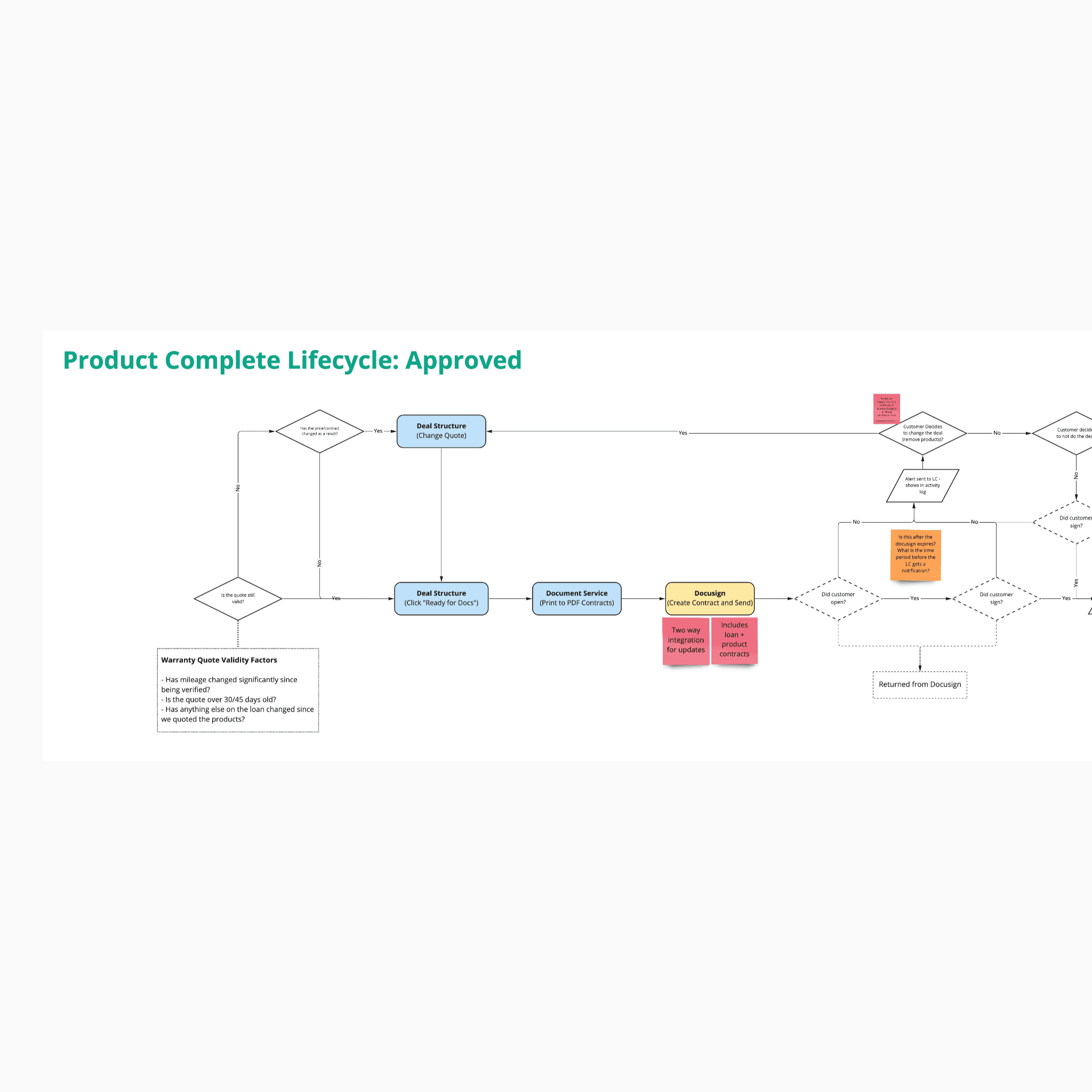
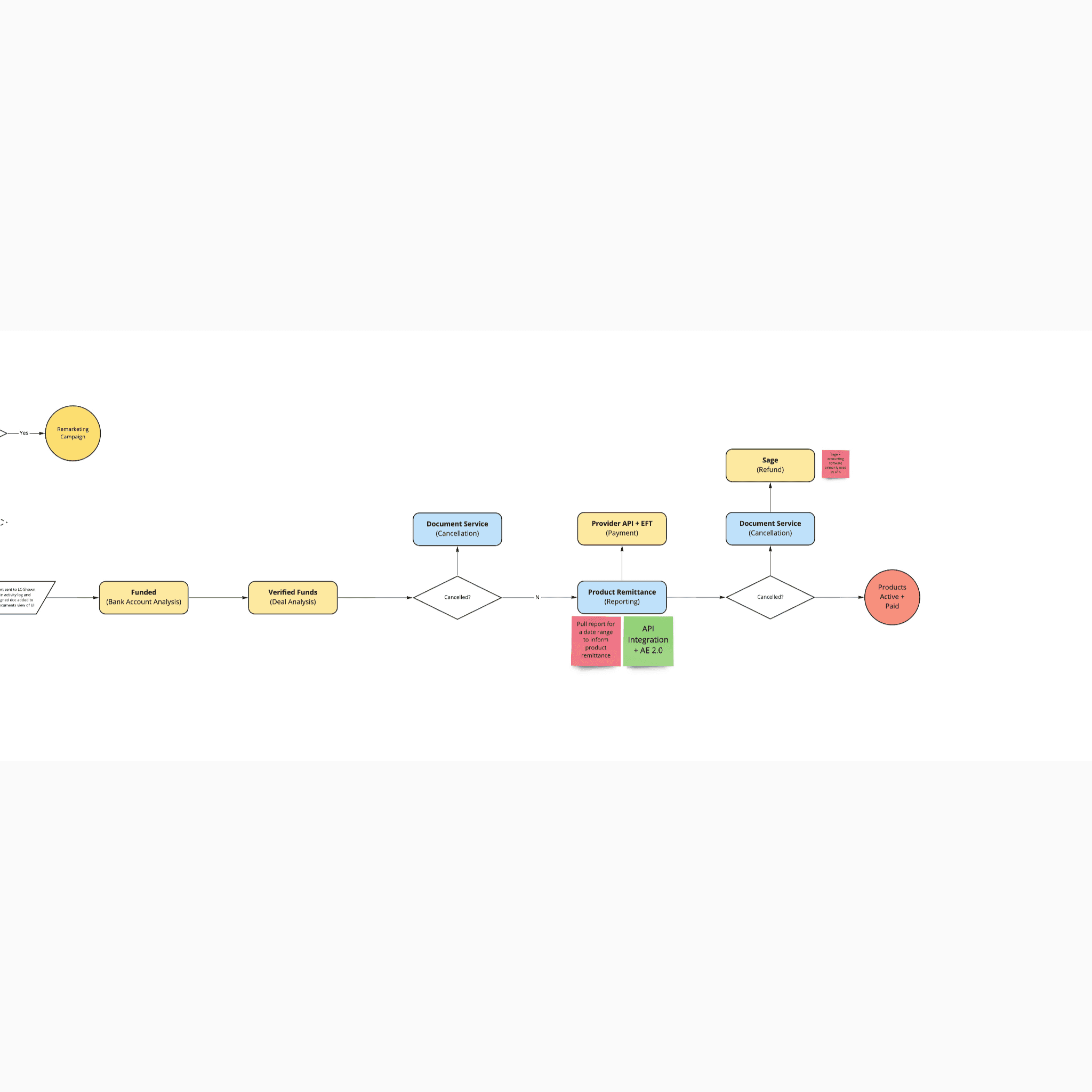
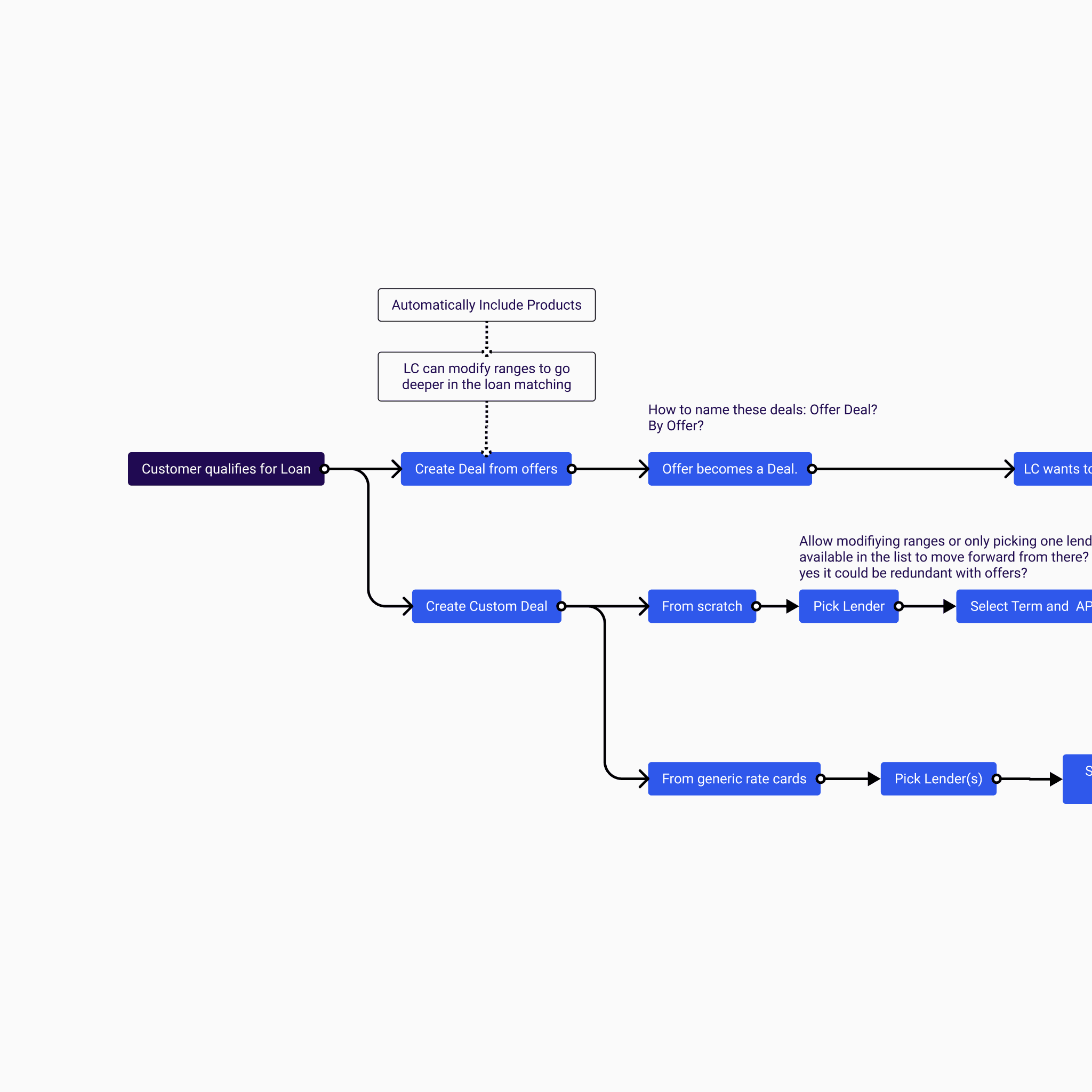
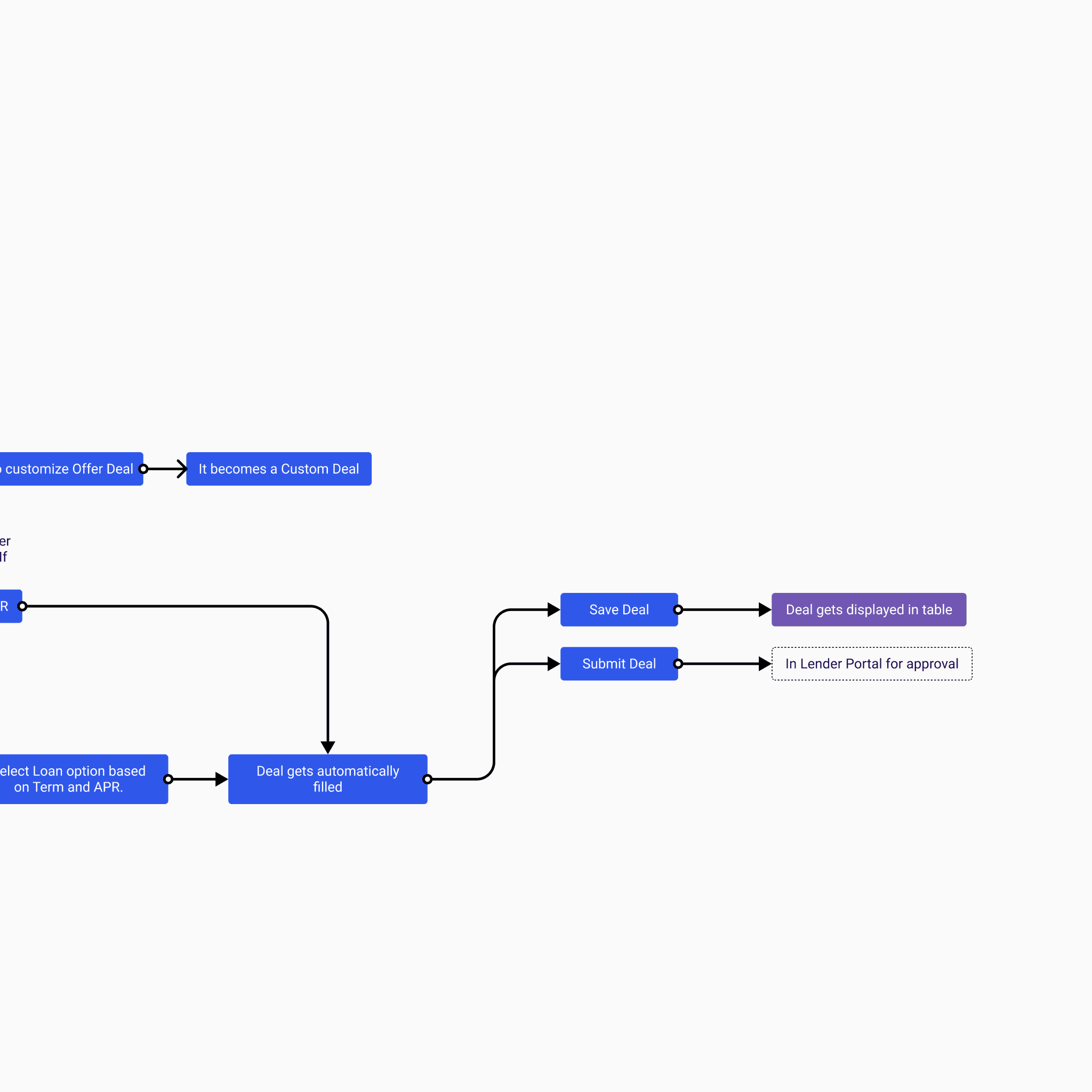
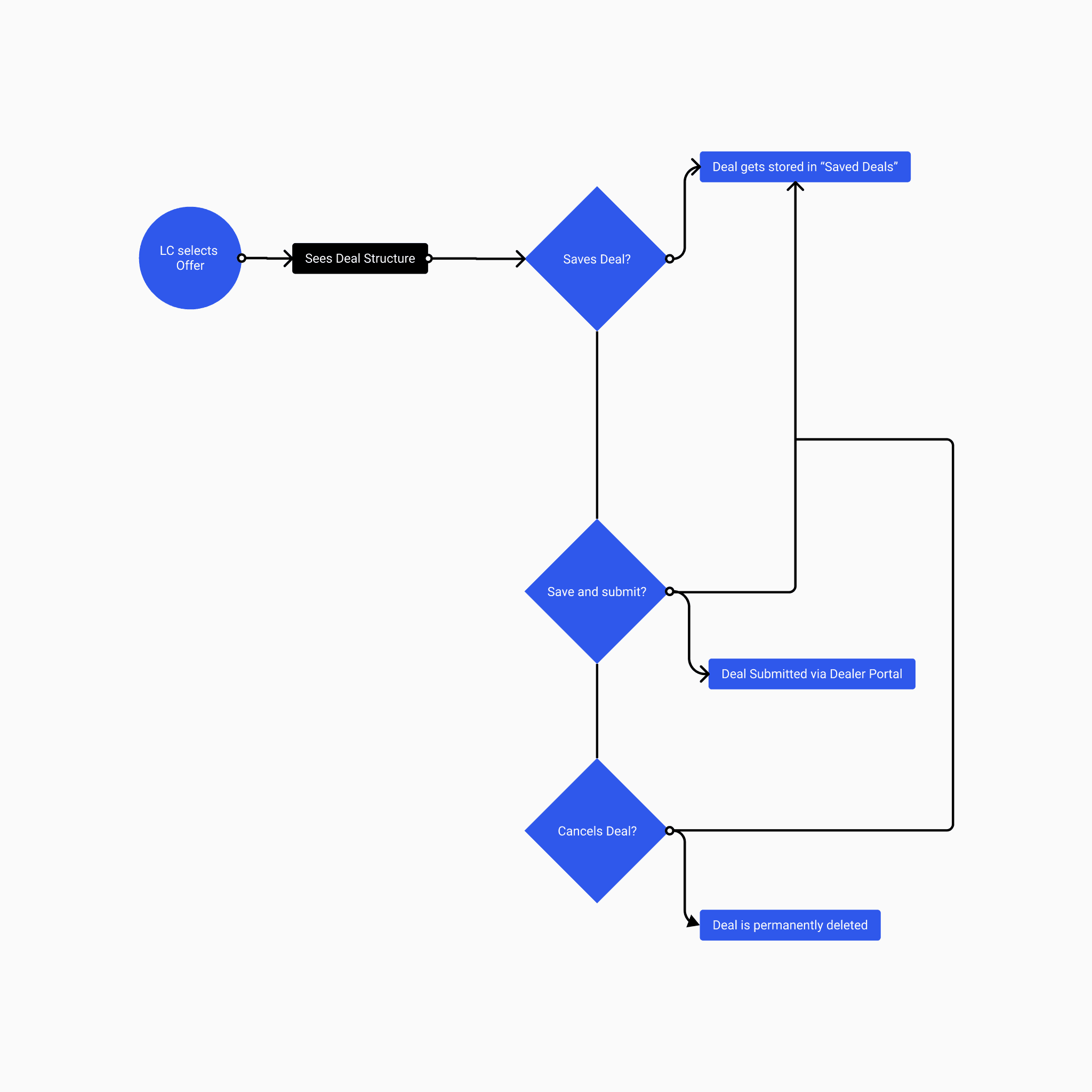
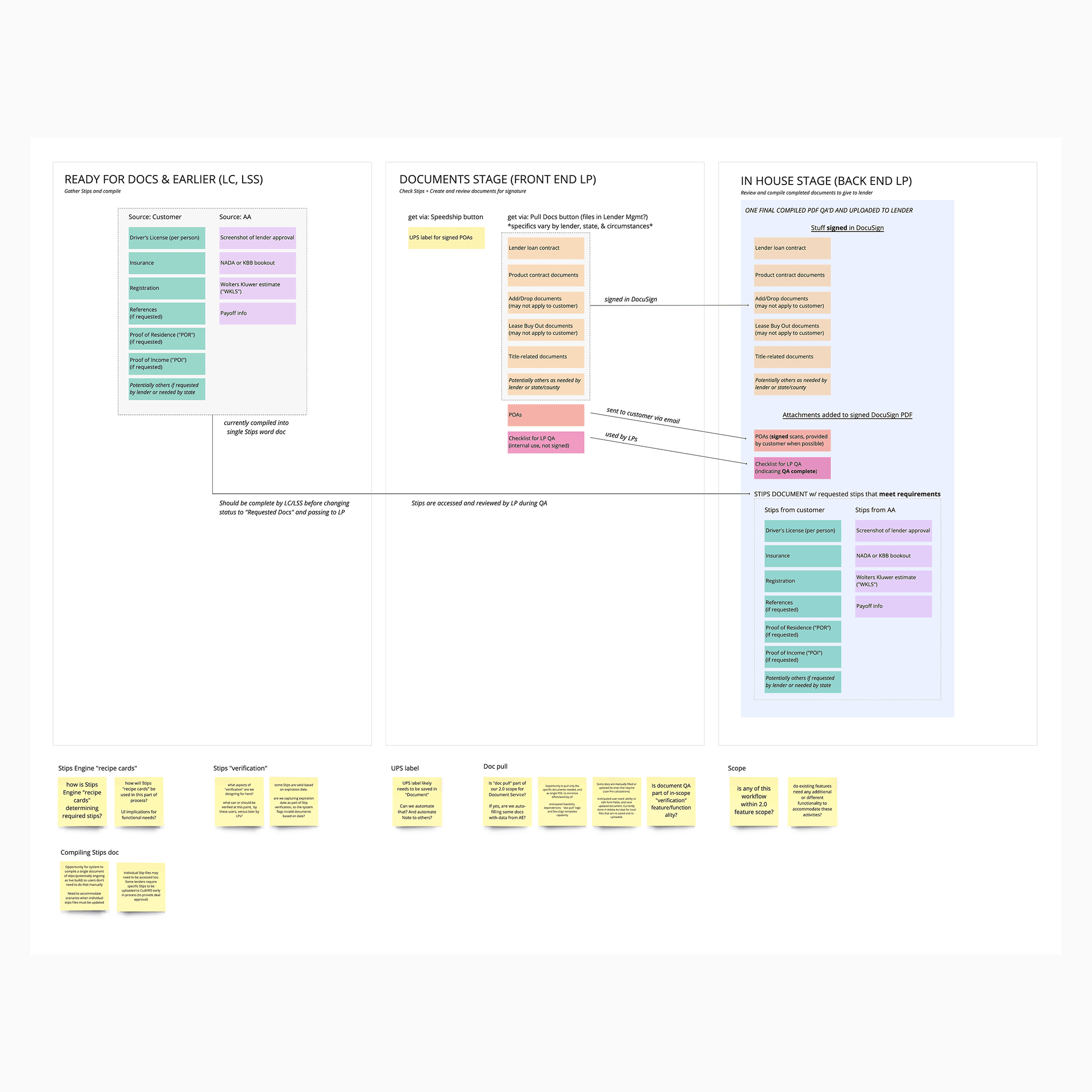
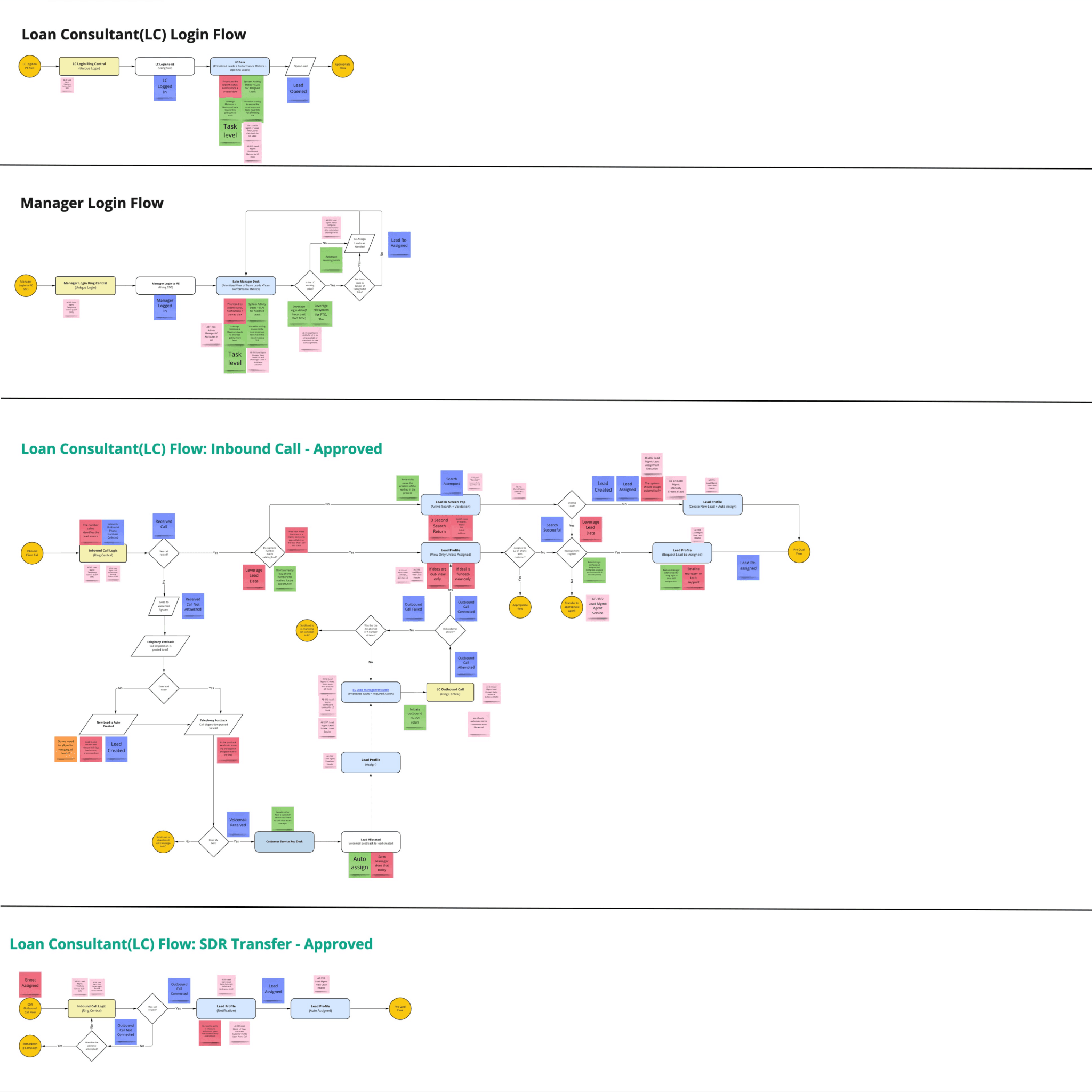
We began by dissecting how Loan Consultants actually worked inside the tool. The existing system did not reflect their mental model or daily workflow, so our first priority was restructuring the deal lifecycle.
We mapped the full journey from intake to approval, identifying friction points and structural gaps. The focus was to:
Clarify decision logic across qualification and approval stages
Reduce unnecessary branching and redundant inputs
Align system behavior with real LC workflows
Define clearer progression states for each deal
These flow diagrams became the structural backbone of the redesign and directly informed navigation, hierarchy, and component behavior.
Wireframes
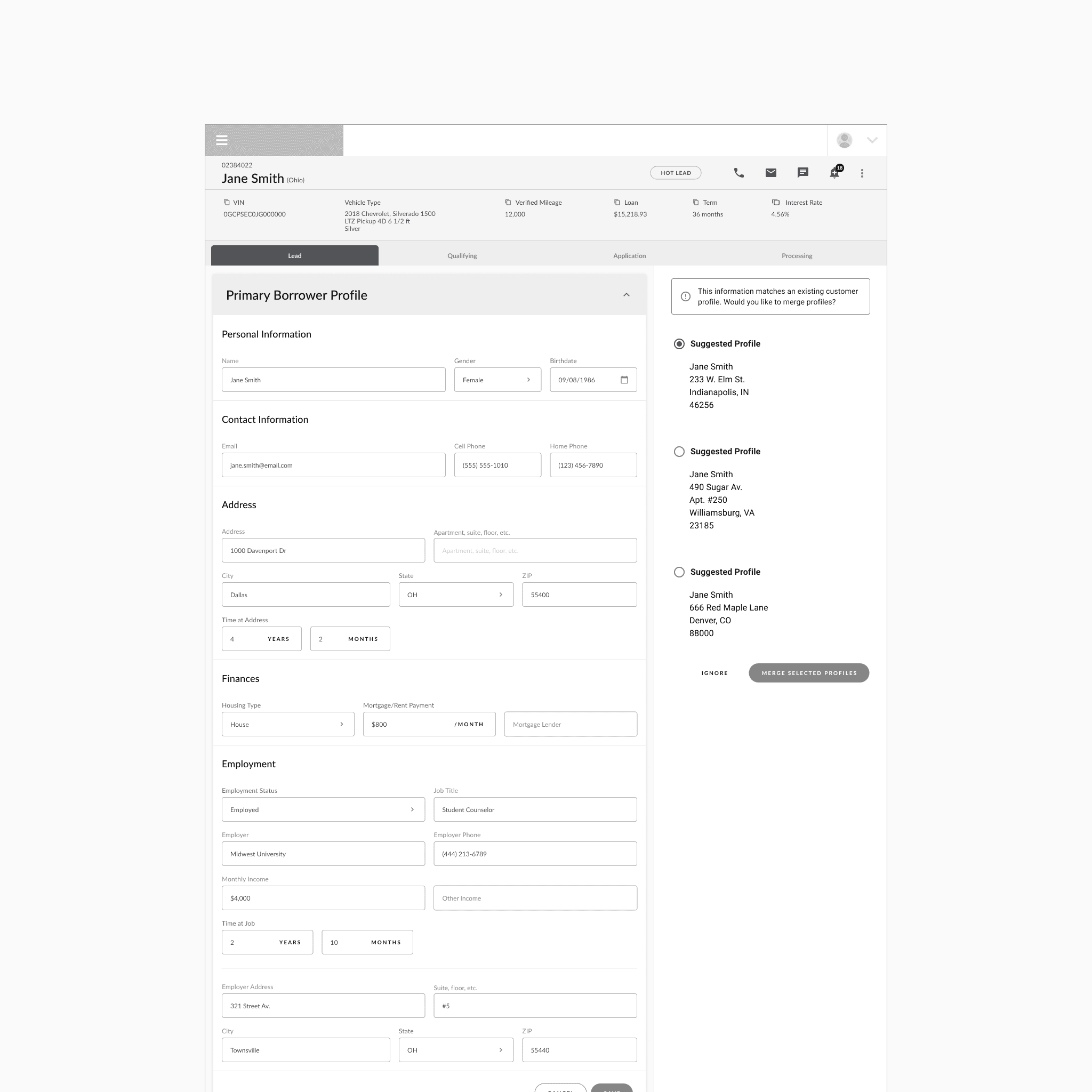
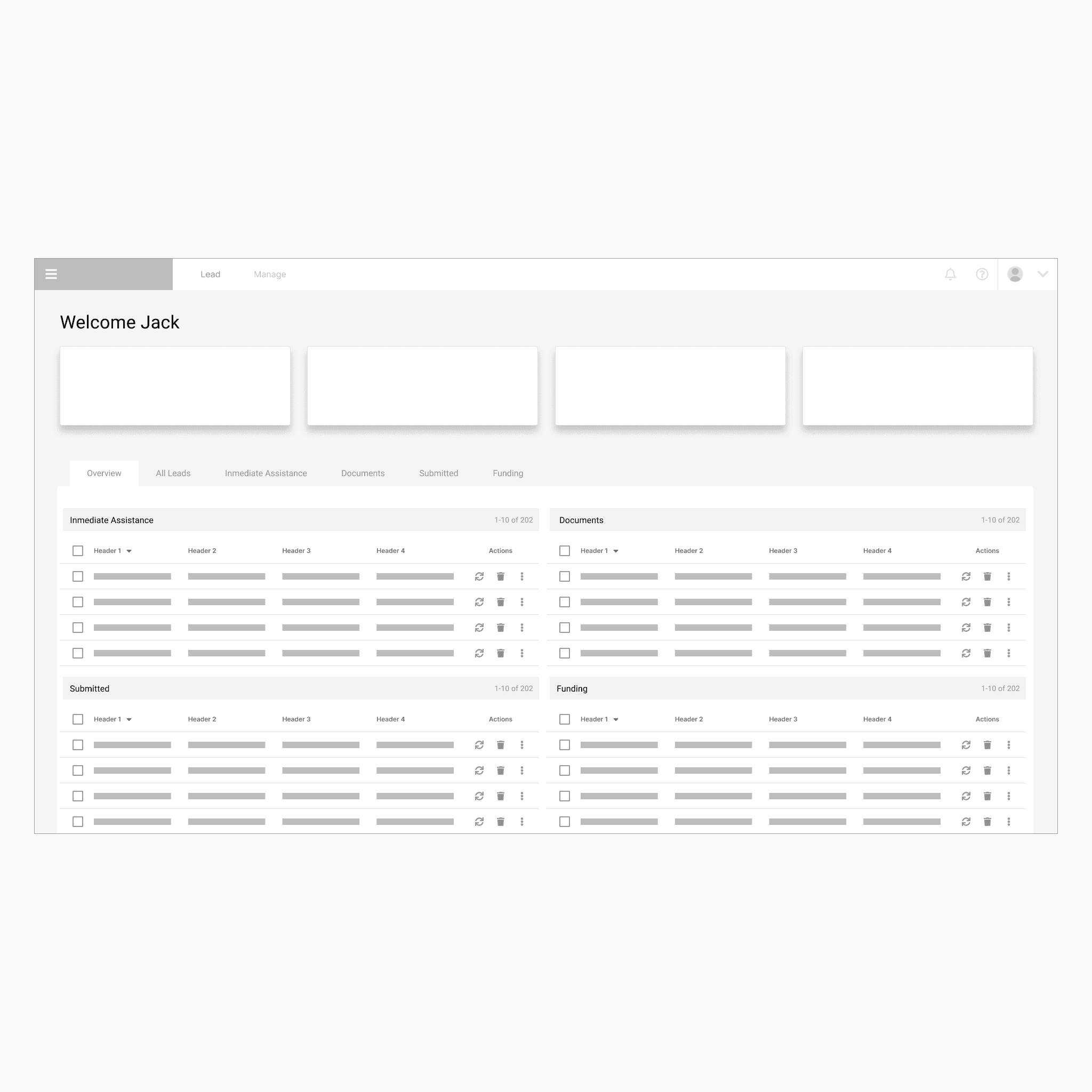
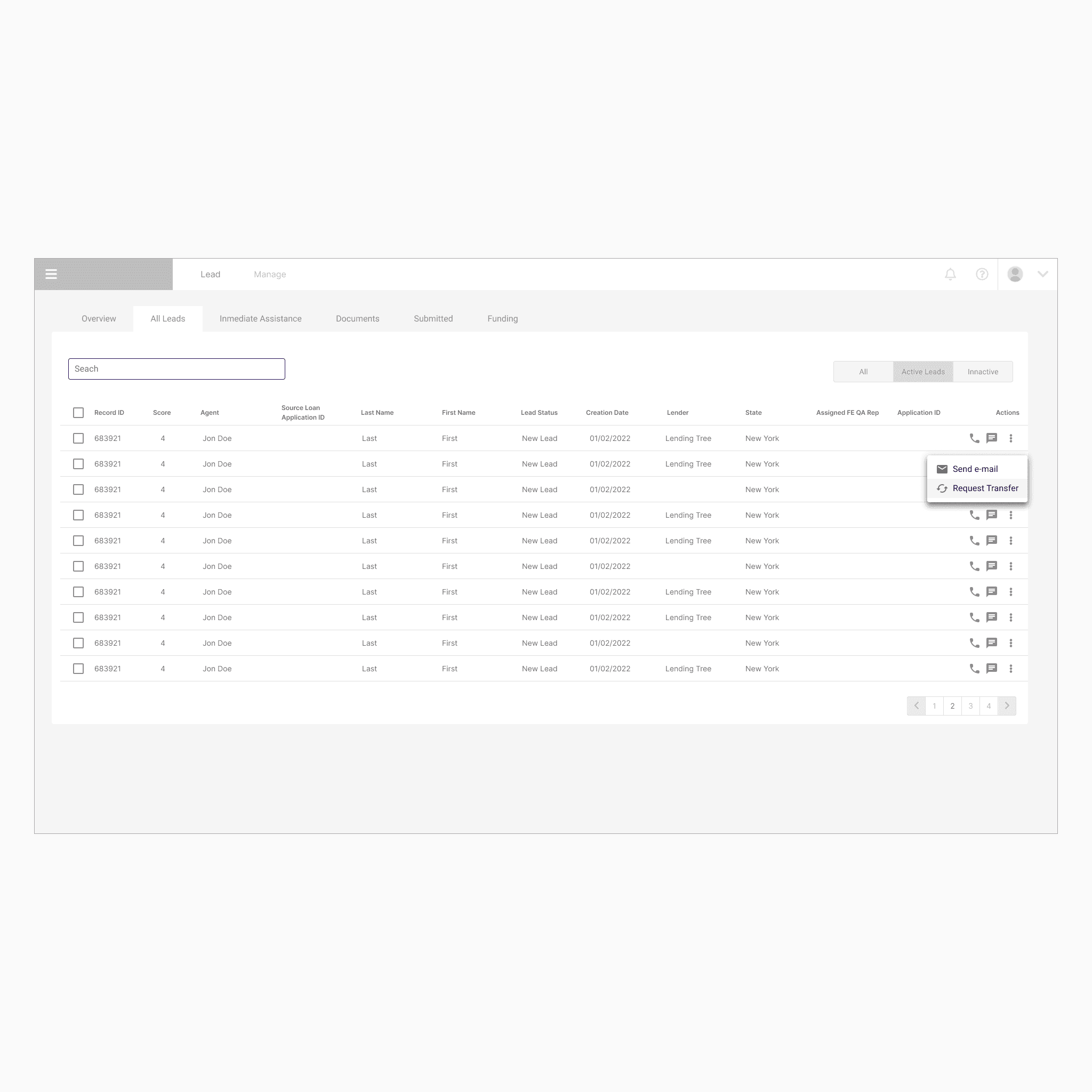
Low-fidelity exploration focused on reorganizing layout structure and simplifying complexity before applying visual polish.
Key areas of focus included:
Information hierarchy and grouping
Logical form progression
Comparison patterns for lender offers
Contextual navigation between leads
Modular screen structures to support scalability
The system needed to support dense financial data without overwhelming users, so layout discipline and visual restraint were critical.
SOLUTION
The solution restructured the entire Loan Consultant experience, from qualification to final deal construction. We redesigned the intake flow, rebuilt the deal comparison logic, clarified information architecture, and centralized operational tools through a contextual side drawer. The result is a structured, scalable platform that reduces friction, improves visibility across complex financial data, and supports confident decision-making throughout the deal lifecycle.
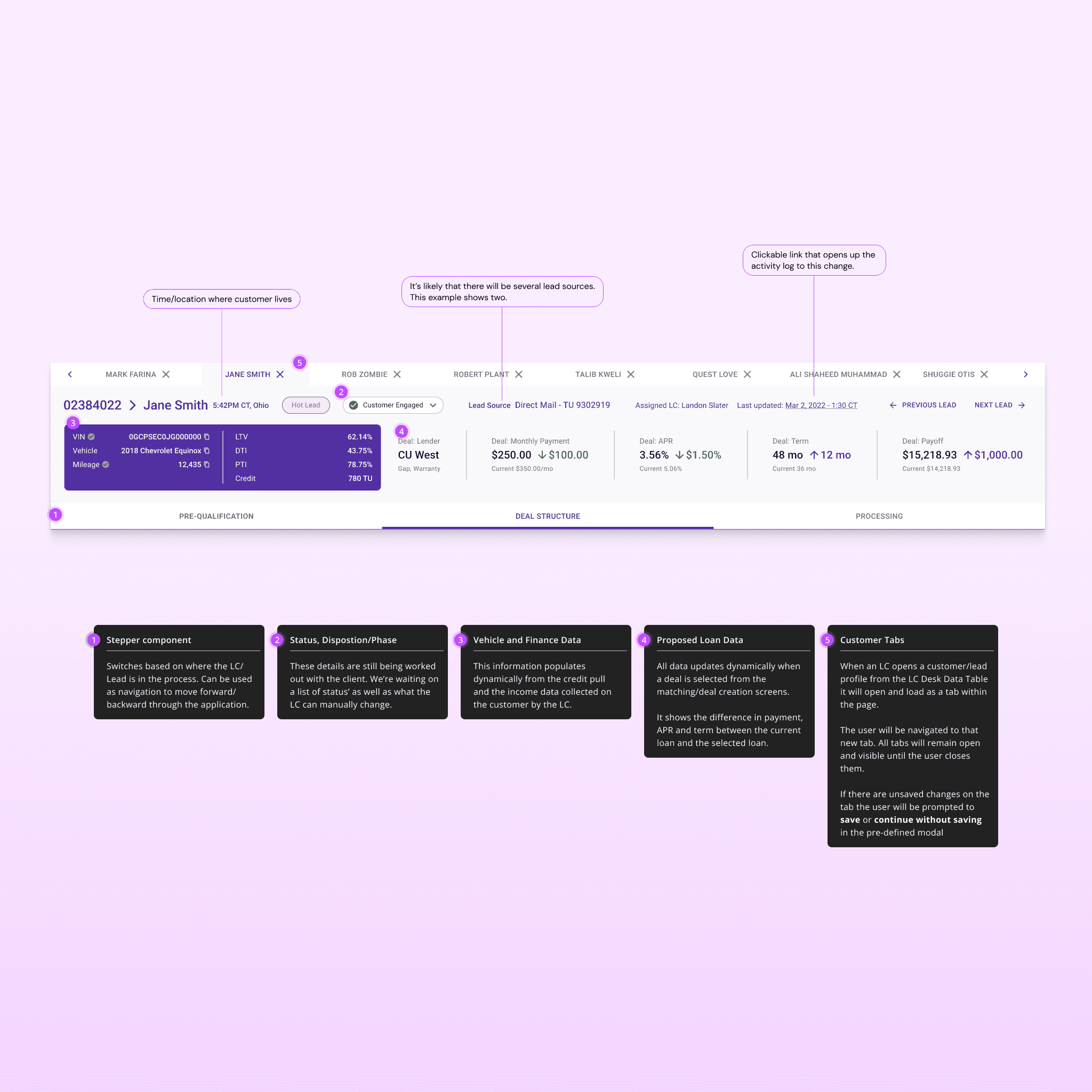
Persistent Deal Header
One of the most impactful design decision was the introduction of a persistent deal header that acts as a control layer across the entire experience.
It provides:
Side-by-side comparison of existing loans and refinance offers
Immediate visibility into key financial metrics
Approval and risk indicators surfaced at a glance
Quick navigation between active leads and Customers
Vehicle information
Clear status of type of lead and customer engagement
Instead of forcing consultants to jump across screens, critical data remains visible throughout the workflow. This reduced cognitive load and improved decision confidence.
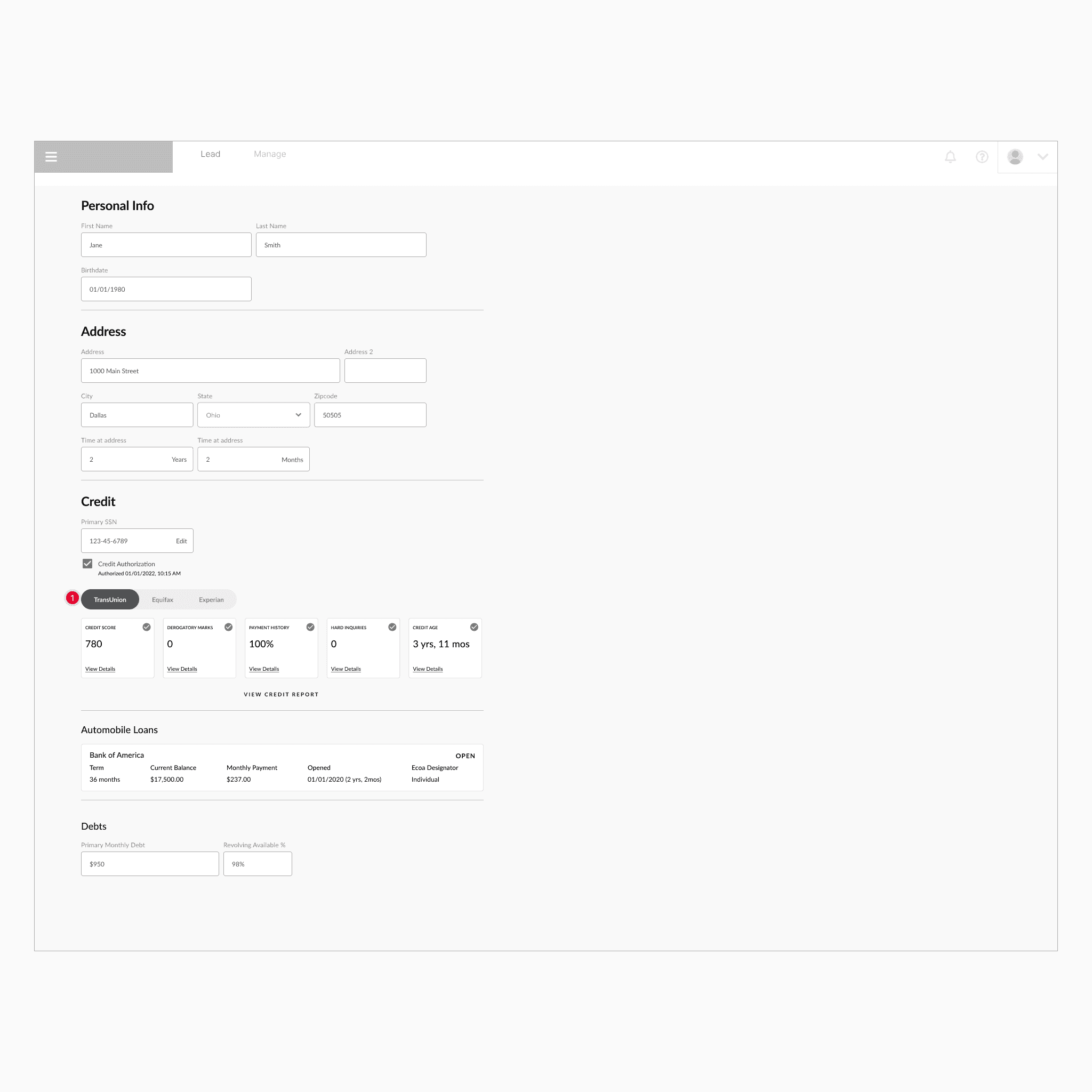
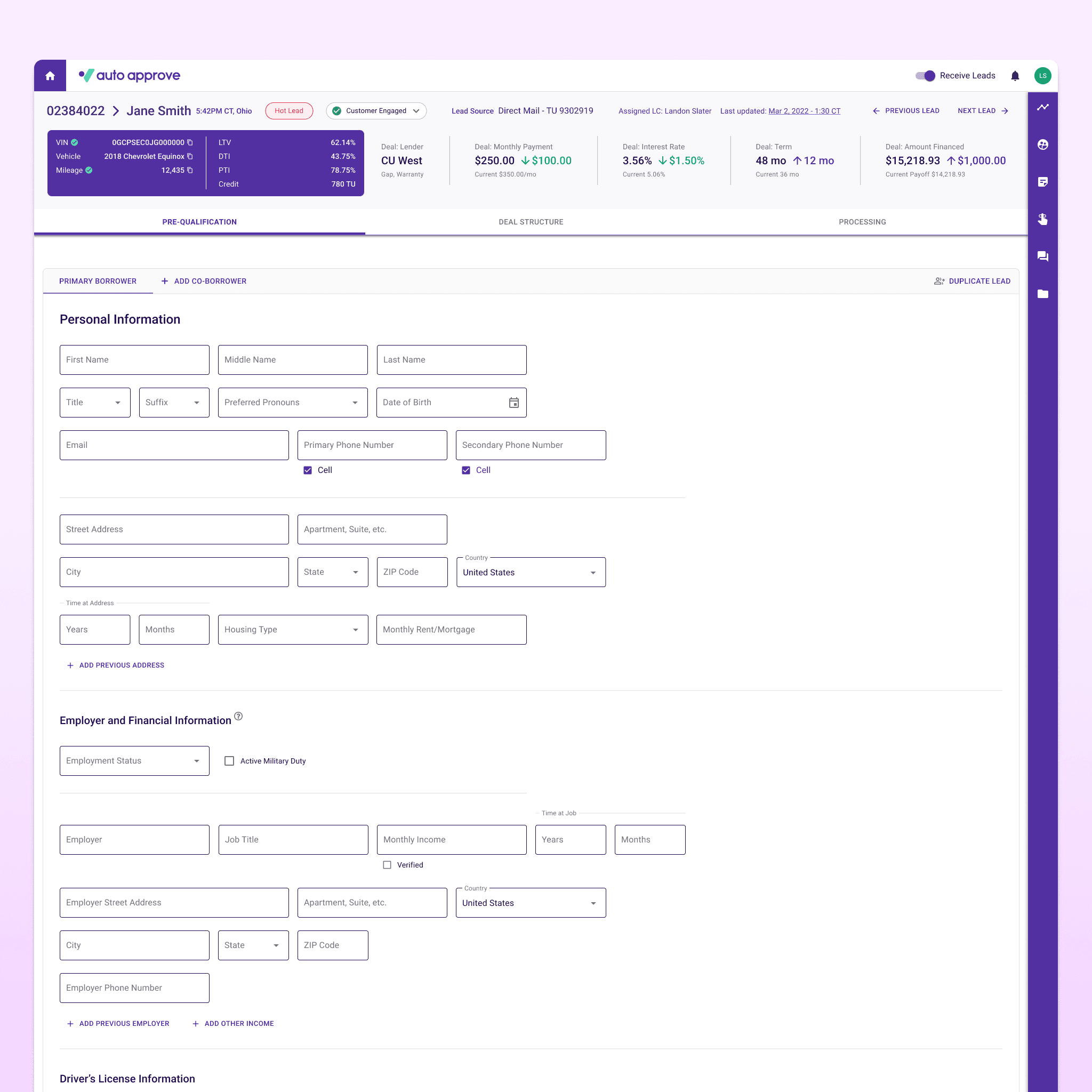
Qualification stage
The Qualification stage was redesigned to streamline intake while reducing cognitive overload for Loan Consultants.
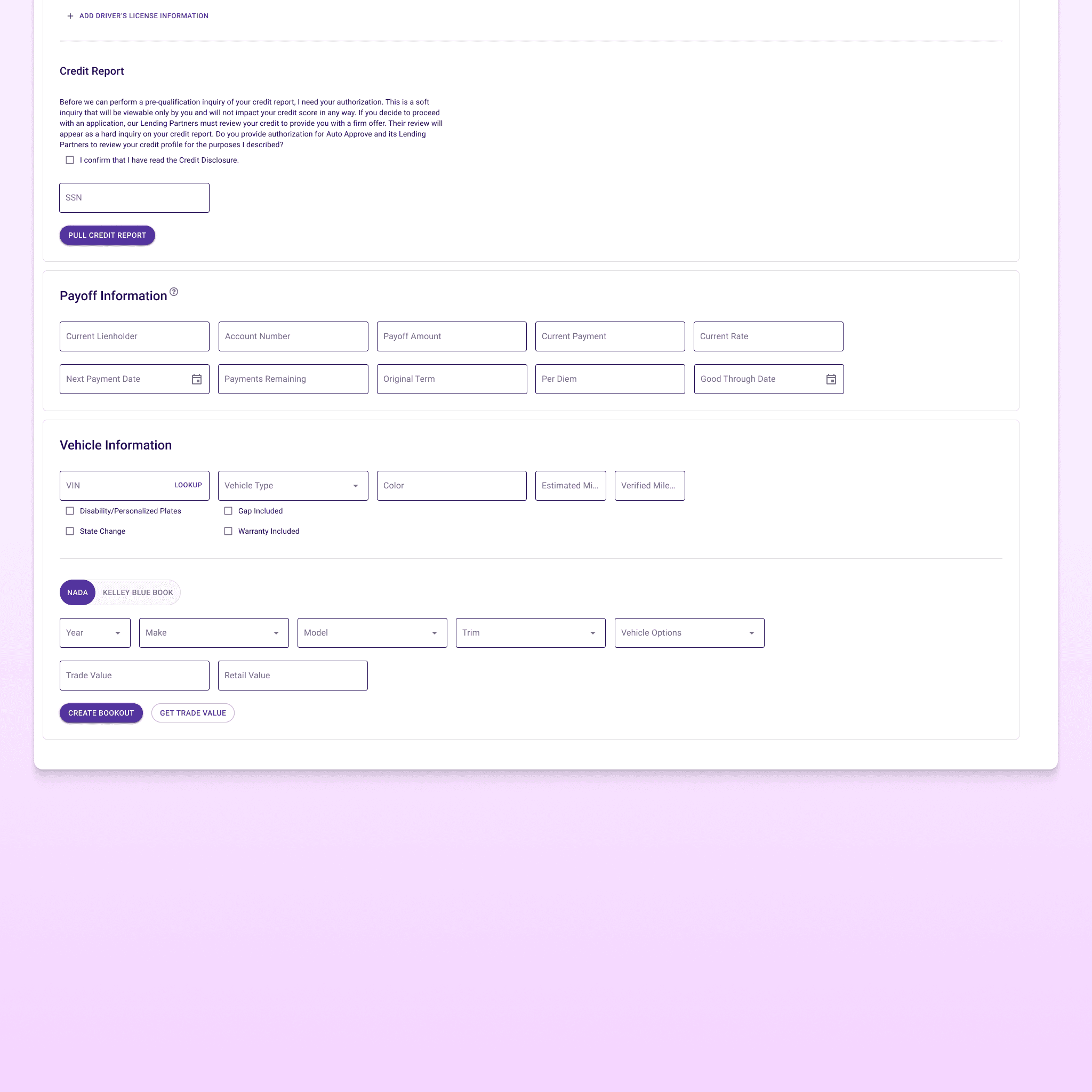
Previously, the form experience was fragmented and visually noisy. We reorganized the structure into clear sections: Personal Information, Employment & Financial Details, Driver’s License, Credit Pull, Payoff Information, and Vehicle Information. Each block follows a logical progression aligned with how LCs naturally collect data during customer conversations.
Key improvements included:
Structured grouping of borrower and co-borrower information
Clear separation between profile data and credit-related actions
Integrated credit report pull directly within the flow
Simplified payoff and vehicle data inputs to reduce repetition
The persistent header plays a critical role here. It surfaces high-priority metrics such as current loan terms, estimated savings, APR comparison, and deal progression status. This allows consultants to qualify and compare in real time without switching tabs or losing context.
The result is a qualification flow that feels controlled, predictable, and aligned with real-world loan conversations.
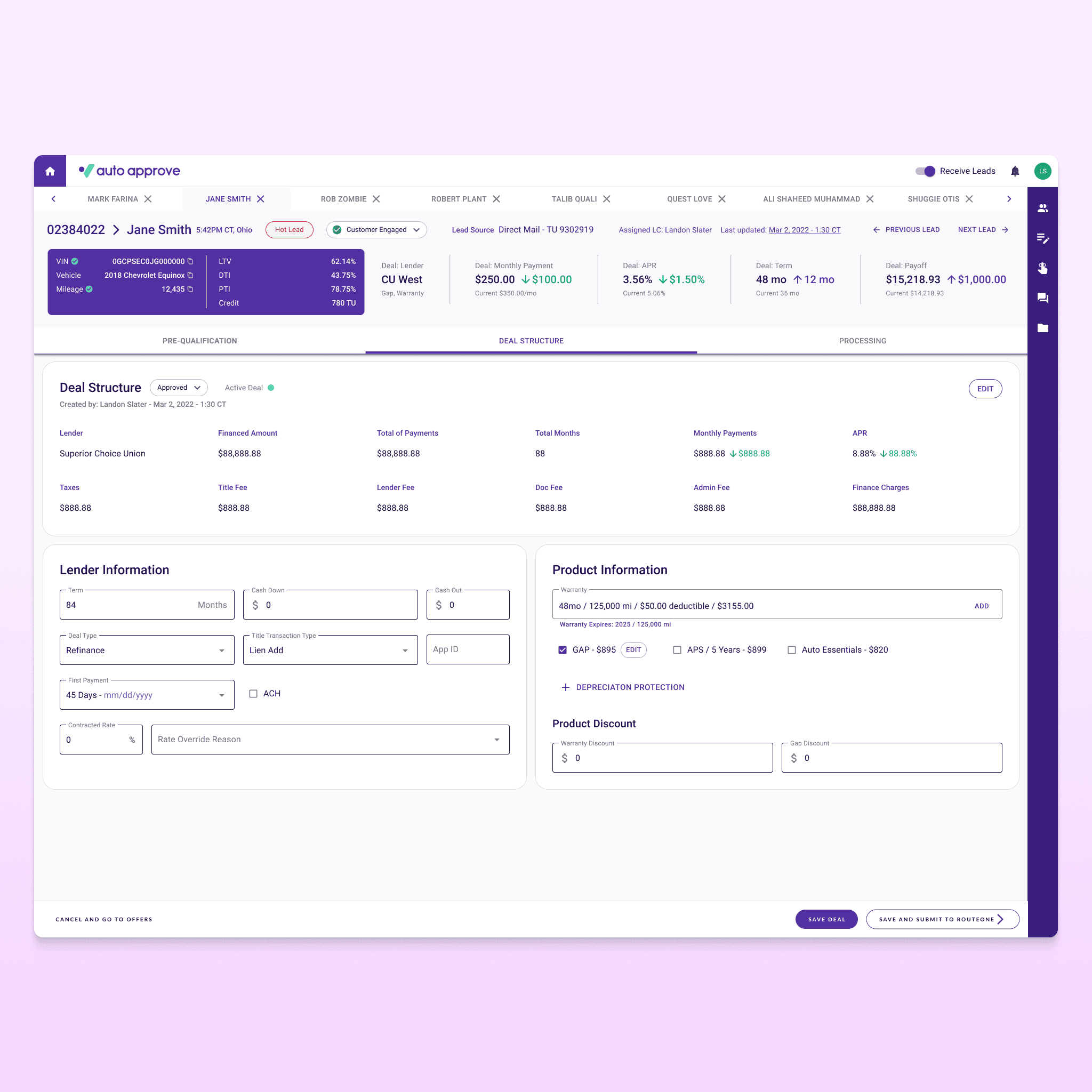
deal structure
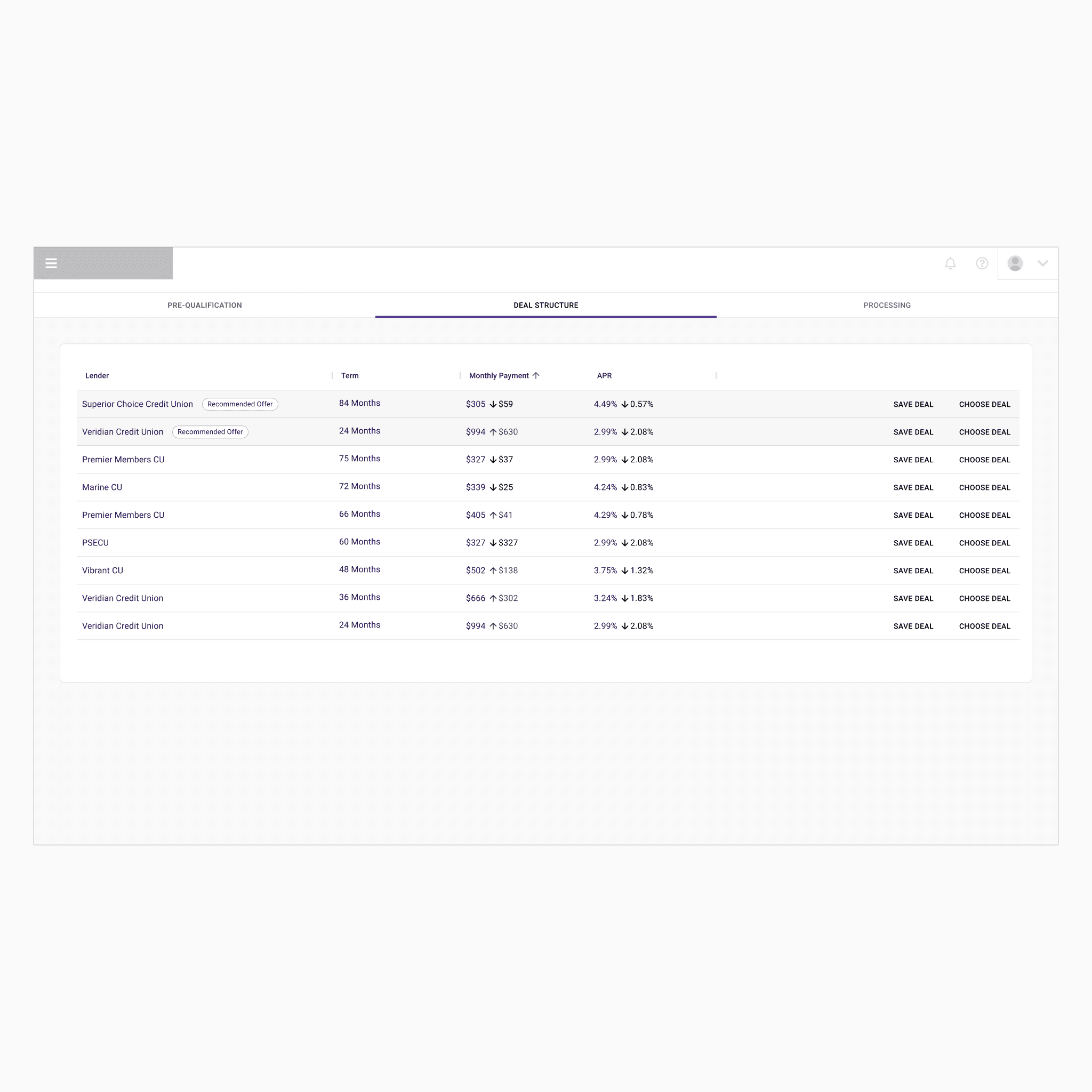
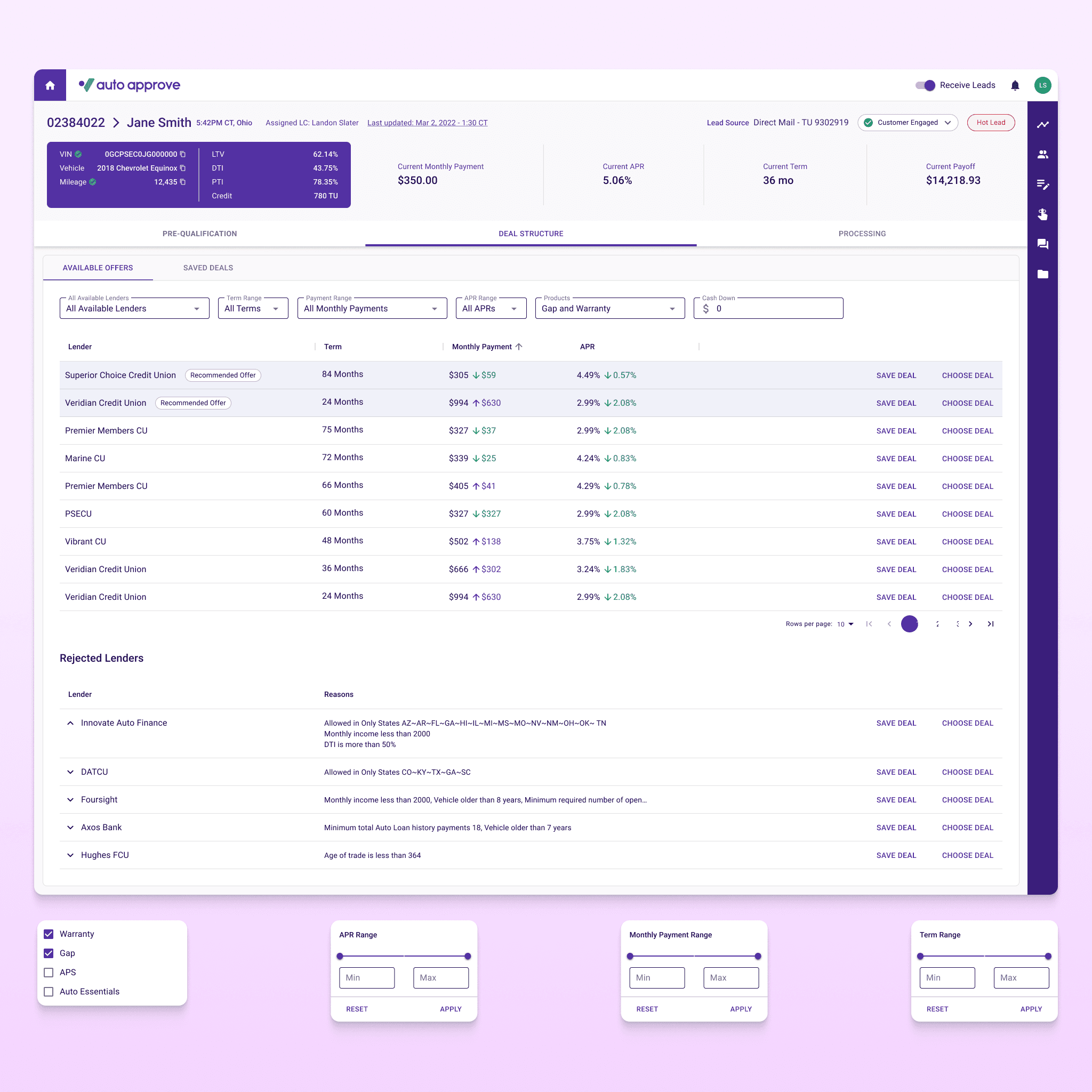
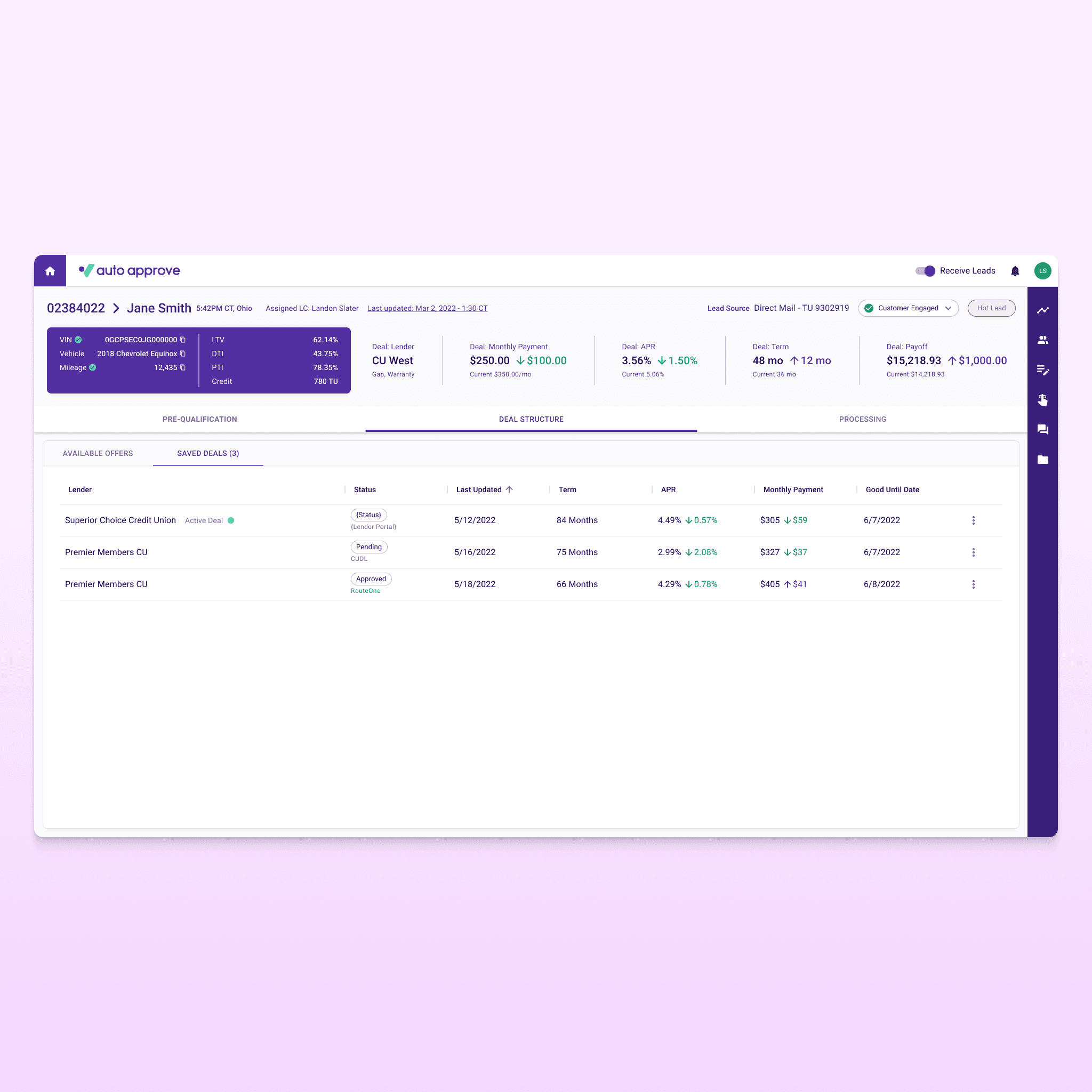
The Deal Structure stage focuses on decision-making and offer comparison.
This is where LCs evaluate lender options, adjust financial inputs, and construct the final proposal. The redesign emphasized clarity in comparison patterns and control over variables.
Major changes included:
Structured lender comparison tables with APR, term, and payment visibility
Clear distinction between available and rejected lenders
Filters for APR range, monthly payment range, and term range
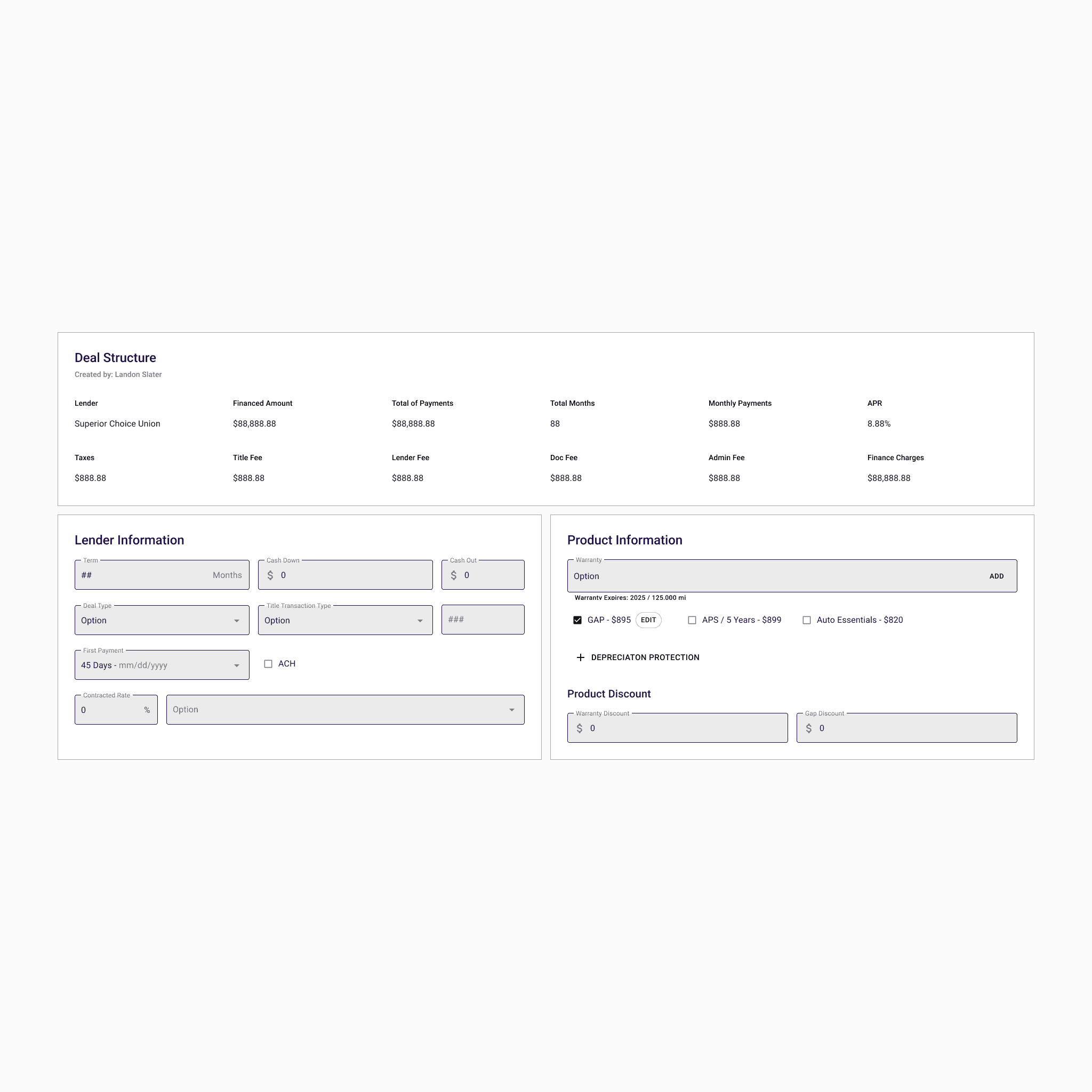
Editable financial inputs that dynamically reflect changes
We also redesigned the breakdown view to give consultants a transparent summary of:
Financed amount
Total payments
APR
Term
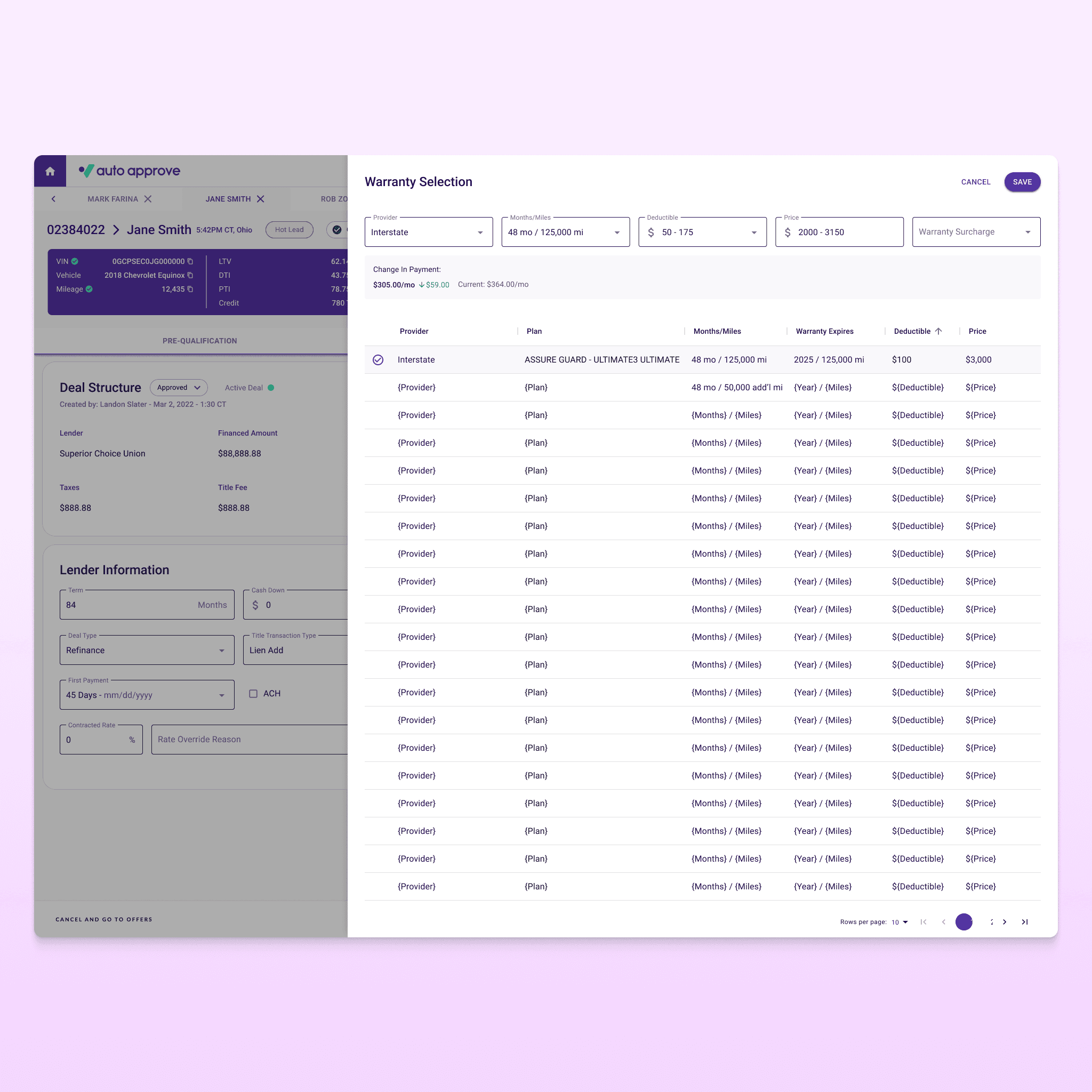
Add-ons such as warranties or GAP
This stage was built to support confident negotiation. Consultants can see trade-offs immediately and adjust parameters without navigating away or recalculating manually.
side drawer
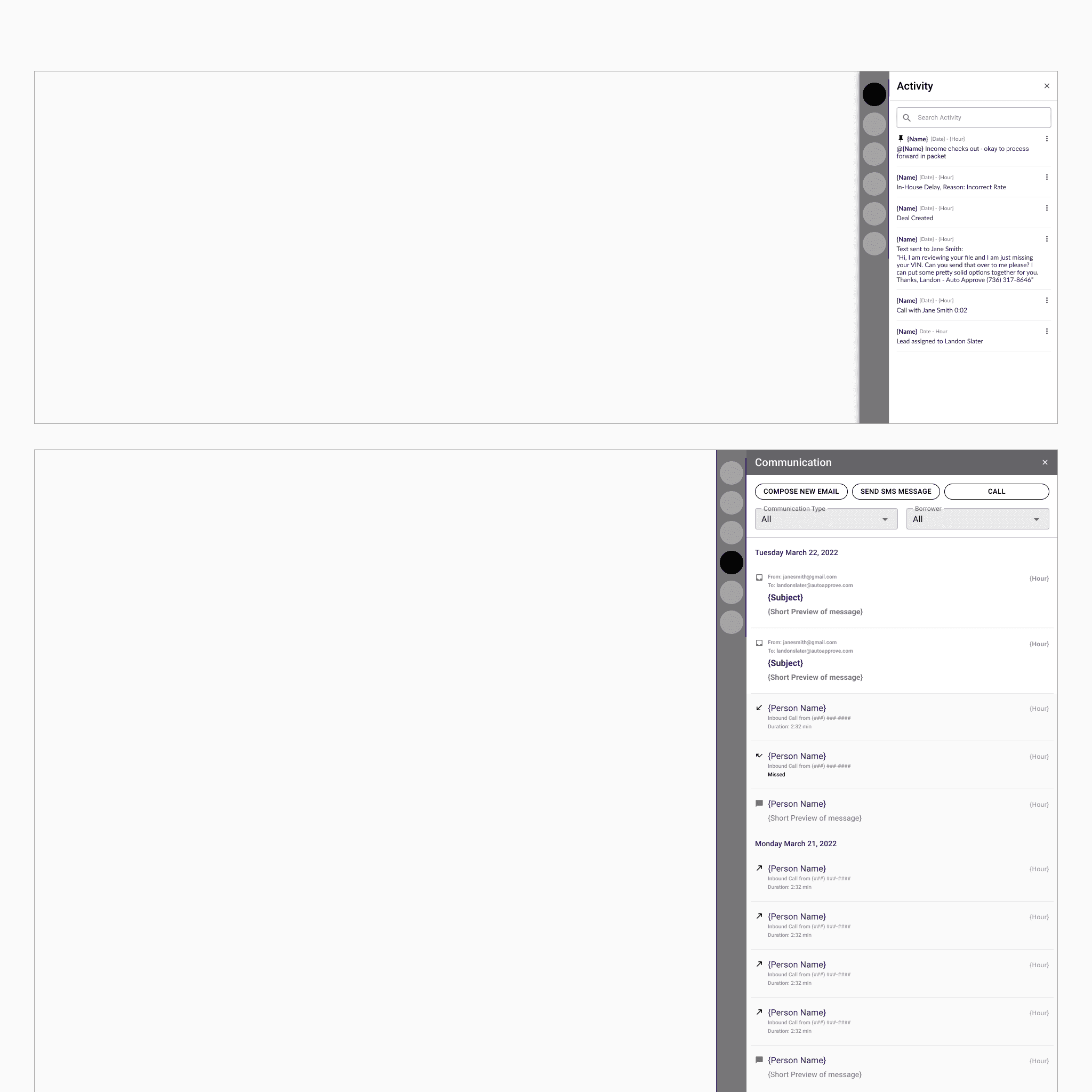
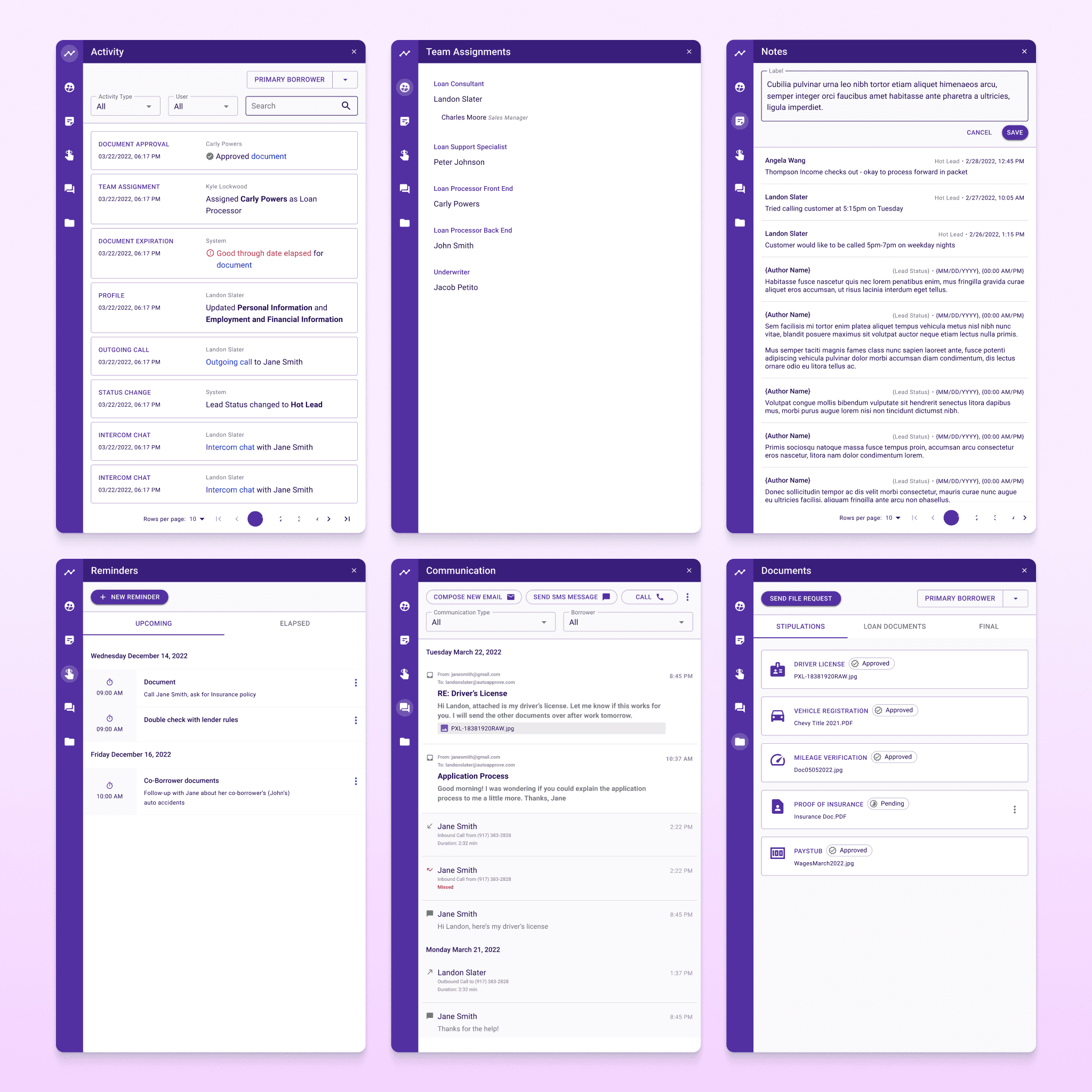
The Side Drawer was designed as a contextual command center.
Instead of forcing users to navigate across multiple sections for activity, communication, documents, or team roles, we centralized operational tools into a persistent side panel accessible at any time.
The drawer includes:
Activity log with timestamped actions
Team assignments and role visibility
Notes with quick-edit capability
Reminders and task tracking
Communication history including calls and messages
Document management with approval status indicators
This structure allows LCs to stay inside the deal while accessing operational support tools without breaking workflow.
It reinforces one of the core principles of the redesign: keep the consultant focused on the deal, not the interface.
The redesign transformed Auto Approve into a structured, decision-first platform built around real Loan Consultant workflows. By simplifying qualification, clarifying deal comparison logic, and centralizing operational tools, the experience reduced friction across every stage of the deal lifecycle.
Consultants were able to move faster, compare offers with more confidence, and manage customer information without losing context. The system shifted from reactive data entry to proactive deal management.
Conclusion
Auto Approve was a much bigger project than I initially expected. It wasn’t just about redesigning screens. It meant stepping into a complex financial system with real operational pressure, technical dependencies, and decisions that directly impacted how Loan Consultants worked every day.
I collaborated with a large cross-functional team including five designers from Kin + Carta, product managers, engineers, QA testers, and a design lead. The scale of the project forced constant alignment, trade-offs, and tough prioritization. It required understanding technical constraints while still advocating for clarity and usability.
This project pushed me. I learned how to operate inside large teams, how to structure thinking in complex systems, and how to stay focused when the scope feels overwhelming.
In the end, we didn’t just improve the interface. We built a stronger foundation for the product to scale and evolve.